In April, Italian open air tourism came together for a discussion.
Four appointments, four territories, one common thread: how to evolve a sector worth 8.5 billion without losing what makes it unique.
Faita Federcamping promoted a cycle of meetings across the country, bringing institutions, businesses and stakeholders together around the main issues reshaping the sector: sustainability, innovation and growth models.
In this context, we contributed through the interventions of CEO Sergio Redaelli, offering a concrete reading of the transformations underway and of the role of mobile homes within this transition.
13 APRIL 2026
1st Open Air Tourism Conference in Marche
Cupra Marittima – Parco sul Mare
Cupra Marittima: regulations, sustainability and tools for the growth of the sector
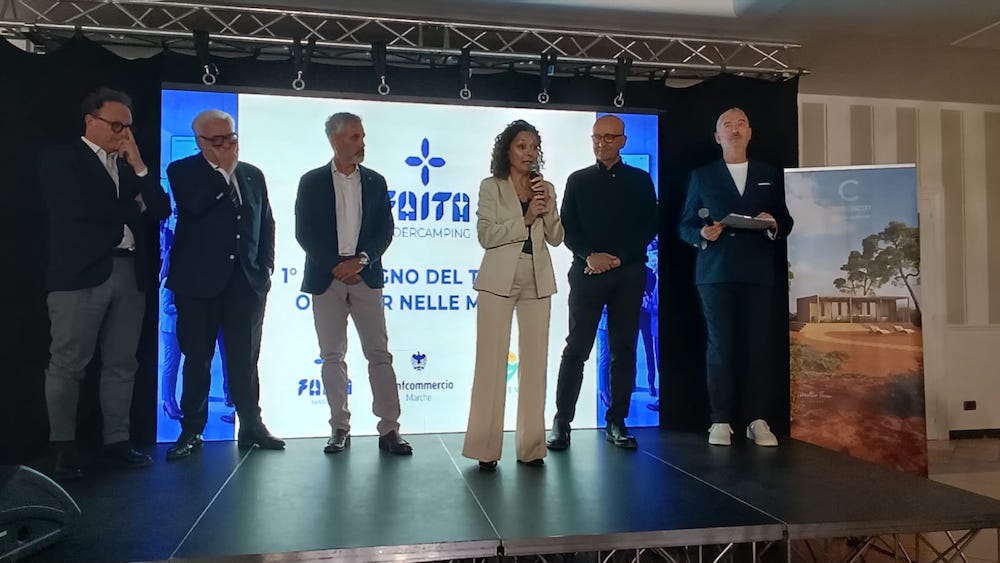
On 13 April, at the Parco sul Mare in Cupra Marittima, the first open air tourism conference in Marche opened a broad and structured discussion between businesses and institutions in Central Italy. The meeting, promoted by Faita Federcamping together with the regional representation, brought together operators from Marche, Abruzzo, Molise, Lazio and Emilia-Romagna, configuring itself as a true moment of synthesis between different territories united by the same evolutionary challenges.
Read more ↓
From the institutional openings, the centrality of the regulatory issue emerged clearly. The announcement of the start of work on the new Unified Text on Tourism of Marche represented a significant step, as did the in-depth discussion of the legislative updates that are redefining the operational framework of businesses: from landscape authorisation to the cadastral relevance of structures, up to the introduction of ATECO code 55.20, now a key element for accessing calls for proposals and funding tools dedicated to the open air sector.
During the day, the debate progressively widened, touching on some of the most current issues for operators: the evolution of tourist demand, increasingly oriented toward personalised experiences; the need to upgrade facilities; the delicate issue of generational transition; and above all the relationship between business and territory, increasingly decisive in building an authentic and competitive offer.
In this context, Sergio Redaelli’s intervention brought a concrete perspective on the link between sustainability and development. «The data are clear: mobile homes are increasingly central to the revenues of hospitality facilities, and when something becomes central it cannot be treated as a commodity, but becomes a design, model and positioning choice», he began.
Redaelli also highlighted how the open air sector today has advanced technological and design solutions, capable of combining speed of realisation, housing quality and environmental attention, even in temporary and highly complex contexts, such as in the Olympic and Paralympic Village of Cortina d’Ampezzo.
«The possibility of applying the logic of the open air sector also to more complex contexts represents a significant evolution, in terms of quality and management», he concluded.
The focus then shifted to an issue that is increasingly strategic for businesses: access to credit. The adoption of the EPD environmental certification (Environmental Product Declaration) was indicated as a key tool for qualifying investments and facilitating access to subsidised measures such as the Nuova Sabatini Green, which allows a reduction in financing costs for the renewal of hospitality facilities.
A passage that clearly marks how sustainability is no longer just a reputational value, but a concrete economic lever.
Alongside these issues, ample space was also devoted to the digital transformation of the sector. In particular, artificial intelligence is emerging as a strategic tool not only for customer acquisition, but also for improving operational efficiency and the quality of the experience.
Finally, the importance of communication emerged strongly: the ability to tell the story of the offer and the surrounding territory in an authentic way becomes an integral part of the tourism product, helping to build value and trust.
The appointment laid the foundations for a more structured dialogue between businesses and institutions, at a time when the rules are changing and those who arrive prepared start with an advantage.
Find out more here.
15 APRIL 2026
Open Air Tourism in the Venice Lagoon and the Po Delta
Chioggia – Darsena Le Saline
Chioggia: data, territories and new geographies of open air tourism
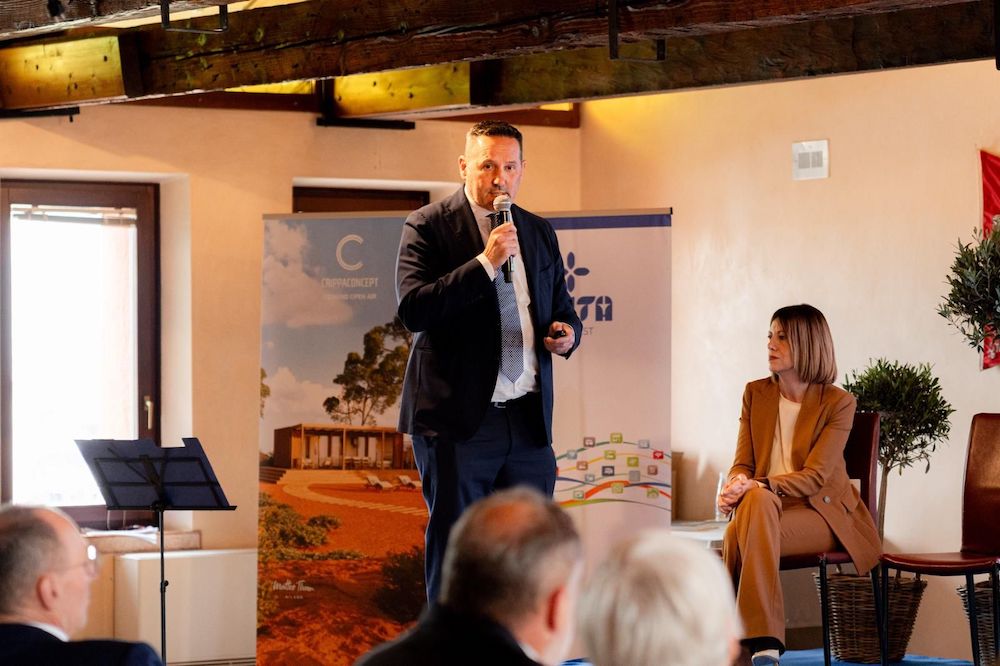
On 15 April, in Chioggia, the conference dedicated to the Venice Lagoon and the Po Delta took on the contours of true “general states” of open air tourism in the Upper Adriatic. An appointment that placed at the centre not only the prospects of the sector, but also the strategic role of a territory unique in terms of environmental characteristics and accommodation capacity.
Read more ↓
The data presented by Faita Federcamping, elaborated by HBenchmark, painted a picture of solid growth: average occupancy of facilities is increasing compared with 2025, with particularly significant signals precisely in the Chioggia-Sottomarina area, where an increase of almost 10 percentage points is recorded. Driving this trend is above all domestic tourism, which is now the prevailing component of demand, confirming the trend toward nearby holidays.
Alongside the numbers, the debate touched on structural issues for the future of the territory: from the need for unified marketing for the Po Delta – still divided today between Veneto and Emilia-Romagna – to the management of environmental critical issues linked to coastal erosion and climate change. Issues that require a shared vision and coordinated investments, also in light of new regulations, such as the obligation of insurance against catastrophic events.
Another central asset was work: the open air sector in Veneto generates around 10,000 jobs, with a strong incidence of seasonal contracts but also signs of continuity and loyalty. At the same time, the need for new skills is growing, especially in the digital field, with the increasingly relevant entry of figures linked to data management, marketing and artificial intelligence, now used by a significant share of travellers to plan their experiences.
In this articulated context, Sergio Redaelli’s intervention offered a concrete key to understanding the issue of investments. The growing attention of businesses toward the quality of the accommodation offer translates into an evolution of mobile homes, increasingly oriented toward the use of ecological, recyclable and certified materials.
«The value of mobile homes is not in quantity, but in the ability to generate economic results. According to HBenchmark data, maxicaravans account for about 29% of the units present in the facility, but generate more than 50% of the turnover. This result is linked to a model that involves people, research and development, production and logistics, and that takes responsibility for the result. For this reason, we are constantly committed to developing products that respond to the needs of those who use them, and to making sustainability declarations objective and verifiable, so as to facilitate access to incentives and financial tools, such as the Nuova Sabatini Green», Redaelli specified.
This is therefore not just an environmental choice, but a strategic passage: the integration of ESG criteria becomes decisive also for access to credit, as highlighted in the discussion with the banking system. Open air facilities are therefore called to rethink their development models, combining sustainability, energy efficiency and design innovation.
Chioggia confirmed that the numbers are on the sector’s side. But numbers alone are not enough: the Po Delta, still divided between Veneto and Emilia-Romagna, is the symbol of an opportunity that still awaits shared leadership.
Find out more here.
16 APRIL 2026
Lazio Open Air: development, innovation and new perspectives between market, evolution and regulatory reforms
Camping Village Roma Capitol – Rome
Rome: towards a new model of open air hospitality
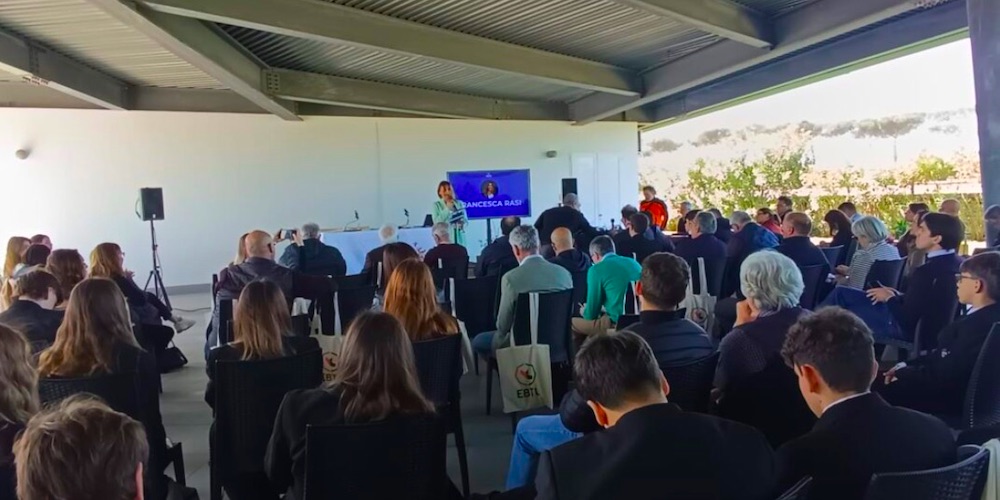
On 16 April, in the setting of Camping Village Roma Capitol, the conference dedicated to Lazio further widened the perspective, addressing in a systemic way the transformations of open air tourism between market, regulation and innovation.
Read more ↓
From the very first sessions, a paradigm shift clearly emerged: open air tourism is no longer just an accommodation type, but an evolved hospitality model, capable of integrating nature, services, sport, wellness and territory. A model that in Lazio shows positive growth dynamics, but still strongly linked to the summer season.
Precisely de-seasonalisation was indicated as one of the main strategic challenges: the goal is to extend the duration of the tourist season and redistribute flows, enhancing not only Rome as an international hub, but also villages, walking routes, lakes and inland areas. In this scenario, the concept of destination evolves toward a system logic, in which facilities, services and territories collaborate to build an integrated offer.
At the same time, the conference highlighted a profound transformation in demand: long stays are decreasing and a more fragmented and demanding clientele is growing. Alongside traditional families, new target groups are emerging, such as guests coming from high-end hospitality, hybrid workers and a generation of travellers seeking personalised experiences, flexibility and high standards.
This evolution corresponds to an equally significant change in supply. Open air facilities are progressively shifting their centre of gravity toward more evolved accommodation solutions, such as mobile homes and glamping, capable of raising the quality of the experience without losing contact with nature.
It is in this passage that Sergio Redaelli’s contribution fits in. «Mobile homes today represent a housing model designed to meet complex needs: comfort, quick installation, energy efficiency and reduction of environmental impact. Even in temporary and highly complex projects, such as the Olympic and Paralympic Village of Cortina d’Ampezzo, approaches based on open air logic emerge: temporariness, reversibility, reduced environmental impact. An evolutionary direction of the culture of the sector, before that of the single project.»
Alongside supply issues, great attention was paid to operational criticalities: rising energy costs, difficulty in finding qualified staff and the complexity of the regulatory framework, which today requires more than one hundred measures to open a facility. In this sense, regulatory simplification was indicated as an indispensable lever to encourage investment and make the sector more competitive at international level.
Finally, the “Lazio Open Air” project outlined a possible future direction: a network model based on shared governance, innovation, continuous training and a common identity, capable of strengthening the territory’s positioning.
Rome and Lazio present wide margins of growth for open air tourism. The conditions are favourable. It becomes central to accompany the evolution of facilities with a competitive and structured approach.
Find out more here.
21 APRIL 2026
Nature defines hospitality
green as a strategic asset of Open Air tourism.
Pistoia – Campus Vannucci
Pistoia: green as a strategic infrastructure of open air hospitality
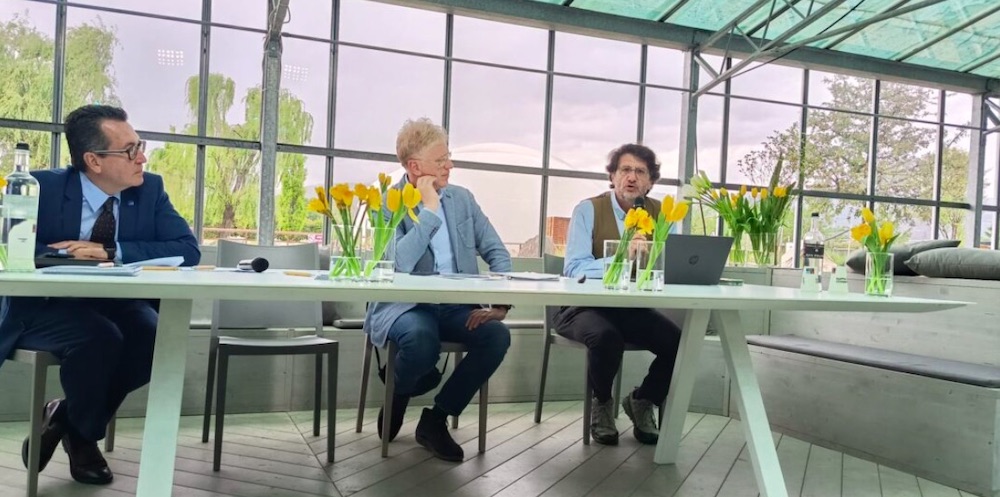
On 21 April, at the Campus Vannucci in Pistoia, the cycle of meetings concluded with an appointment that shifted the focus onto an element that is as identity-defining as it is strategic for the sector: green. The conference, promoted by Faita Federcamping together with the world of research and businesses, placed at the centre a broad reflection on the role of nature in the design of open air hospitality, going beyond a purely aesthetic vision to recognise its structural value.
Read more ↓
The discussion highlighted how green now represents a true infrastructure of hospitality: not only a landscape element, but an active component in building the tourist experience, capable of affecting wellbeing, perceived quality, accessibility and sustainability. In this sense, the design of open air spaces is evolving toward an integrated approach, in which architecture, botany and services dialogue to generate immersive environments coherent with the territory.
Crippaconcept’s contribution, through Sergio Redaelli’s intervention, fits into this vision. He pointed out that «Accommodation solutions must dialogue with the natural context, not simply be placed within the landscape. Design, materials and positioning must be designed to enhance it and strengthen the identity of the destination.»
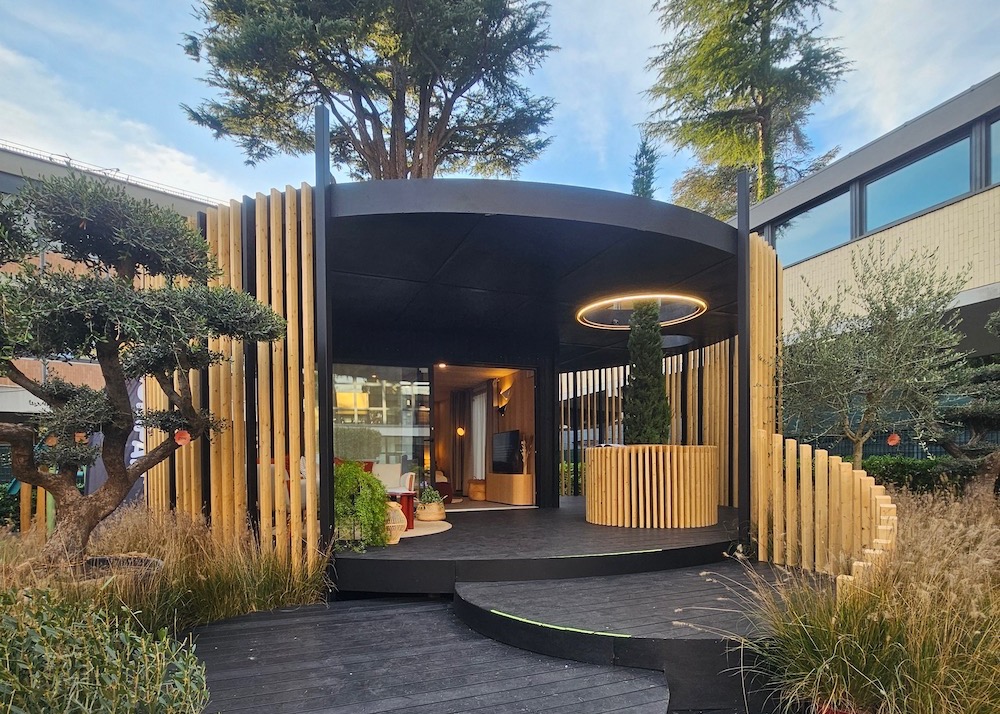
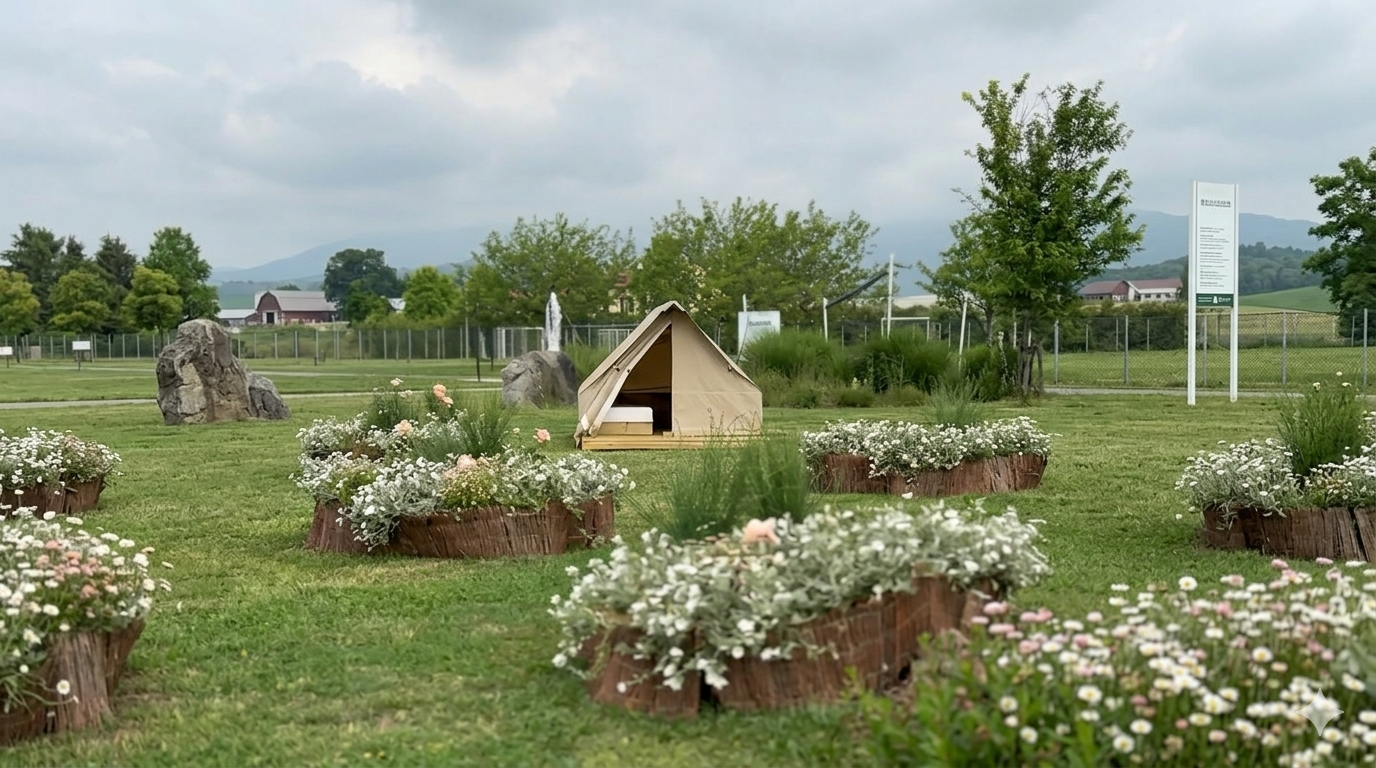
In the park of the Campus Vannucci, six Babe Lodges were installed, set within the precious natural context.
View this post on Instagram
Related Posts